
The battered-spouse I-751 waiver
If your two-year green card came through a marriage to a person who abused you, you can ask USCIS to remove the conditions without that person. INA 216(c)(4)(C) is the waiver for a conditional resident who was battered or subjected to extreme cruelty. It can be requested at any time after conditional residence is granted, without waiting for the 90-day window, and after a divorce, as long as it is filed before a final order of removal.
Current as of October 2026. We re-check this page every quarter and after any change in the law.
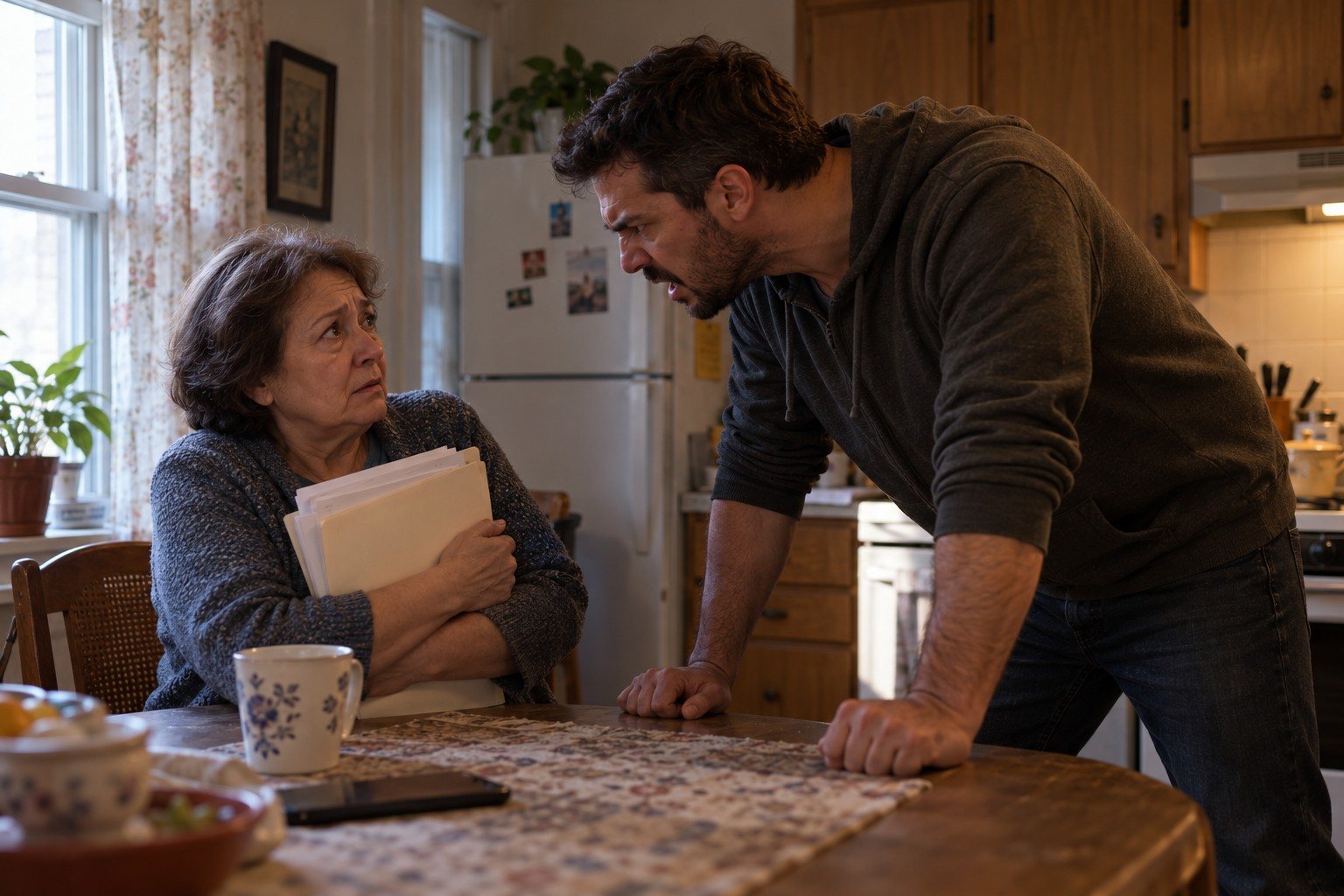
A conditional green card is the two-year card some people receive through a recent marriage. Normally both spouses sign Form I-751 together to remove the conditions. An abusive spouse can turn that joint signature into leverage: sign, or I will not. The law took the signature away from them. You can file alone.
This is a different filing from the VAWA self-petition. The self-petition is for a person who does not yet have a green card through the abuser. The I-751 waiver is for a person who already has one, and needs the conditions lifted.
What the law says

INA 216(c)(4)(C) allows the joint filing requirement to be waived for a conditional resident who entered the marriage in good faith and who, during the marriage, was battered or subjected to extreme cruelty by the spouse (or whose child was). Three features matter most for a survivor:
- No signature from the spouse. The petition goes in without them.
- Timing is flexible. The abuse waiver may be requested at any time after conditional residence is granted. You do not have to wait for the 90-day window, and you may file while married, separated or divorced. It must be filed before a final order of removal (USCIS Policy Manual Vol. 6, Part I, ch. 5; 8 C.F.R. 216.5(a)(1)(iii), (a)(2), (e)(3)(ii)).
- Divorce does not close the door. The waiver is available after the marriage ends.
USCIS decides the waiver first. If USCIS denies it and you end up in removal proceedings, the immigration judge can review the denial under Matter of Stowers, 22 I&N Dec. 605 (BIA 1999). That is a second look, not a reason to file a thin first one.
The four ways to file without the spouse

INA 216(c)(4) lists four bases for removing conditions without a joint petition. You may claim more than one. As of October 2026:
| Basis | What you show |
|---|---|
| (A) Extreme hardship | Removal would cause extreme hardship. Only circumstances during the 2-year conditional period count (an earlier situation that continued into it may count). No qualifying relative is needed, and good faith of the marriage is not an element of this basis (6 USCIS-PM I.5(A)) |
| (B) Good-faith marriage that ended | The marriage was entered in good faith but has legally ended by divorce or annulment (not by the spouse's death), and you were not at fault in failing to file jointly. A separation is not enough. "Not at fault" refers to the failure to file jointly, not to who ended the marriage (6 USCIS-PM I.5(B)) |
| (C) Battery or extreme cruelty | The marriage was entered in good faith, during the marriage you or your child was battered or subjected to extreme cruelty by the spouse or the citizen or permanent resident parent, and you were not at fault in failing to file jointly |
| (D) Intended spouse | An intended spouse (where the marriage was invalid because of the other person's bigamy) who was battered or subjected to extreme cruelty after the ceremony, and was not at fault in failing to file jointly |
Authority: INA 216(c)(4)(A)-(D); 8 U.S.C. 1186a(c)(4). USCIS must consider "any credible evidence." If several bases are claimed, USCIS approves on the abuse basis first, and 1367 confidentiality then covers the whole petition (6 USCIS-PM I.5(C)). If the spouse died, that is handled as an individual filing, not as this waiver.
No mental-health evaluation required

The Policy Manual says conditional residents seeking the battery or extreme cruelty waiver "are not required to submit a recommendation from a mental health professional." It treats the older regulation that asked for one, 8 C.F.R. 216.5(e)(3)(iv)-(vii), as superseded by VAWA 1994 (Pub. L. 103-322, sec. 40702). Officers cannot deny because a particular piece of evidence was not provided (6 USCIS-PM I.5(C) and fn. 37, as of October 2026).
What "extreme cruelty" covers

Abuse does not have to leave a mark. Threats, isolation, control of money and documents, and threats to report you to immigration are the kinds of conduct people describe. Whether the record shows battery or extreme cruelty is decided on the whole relationship, so the work is building a record that shows the pattern, not only the worst day. The page on abuse without violence explains how that is shown for the self-petition, and the same kind of evidence is gathered here.
Building the record
The file has to show that the spouse abused you, and because the abuse basis requires a marriage entered in good faith, proof of the shared life goes in too: commingled finances, how long you lived together, children, and anything else relevant (6 USCIS-PM I.5(B)). You may not have the papers. Abusers often keep them. These are the categories people usually draw on.
- Your own declarationA detailed, dated account in your own words.It is written over several sessions with a lawyer, not in one sitting.
- Proof of the shared lifeLeases, bills, bank records, photographs, messages.If the spouse kept them, people who knew you as a couple can describe what they saw.
- Records of the abuseMedical or counseling records, police reports, protective orders, shelter letters, messages and voicemails.None of these is required. Statements from people who saw the effects can carry weight.
- Your conditional green card and status papersThe card, the approval notice and any receipt notices.If the spouse took them, they can be replaced or proved through government records.
If the spouse took your documents, read what to do when the abuser has your documents. Do not go back for them without a safety plan made with an advocate.
Arrests and cross-complaints
If you were arrested or charged, including on a complaint the spouse made, read arrested or charged first, and talk to your criminal lawyer before writing anything down about what happened.

Fees and timing

As of October 2026, Form G-1055 (edition 10/16/26) lists the Form I-751 government filing fee as $750 on paper or $700 online, and $0 for a conditional resident, spouse or child who files a waiver of the joint filing requirement based on battery or extreme cruelty. None of it is our legal fee. Check the Form I-751 page on uscis.gov before filing, because fees change. We do not print processing times; see USCIS processing times. If the petition sits far past the posted time, the page on a case taking too long explains the options.
If USCIS terminates conditional status, you may seek review in removal proceedings, and DHS bears the burden of proving by a preponderance of the evidence that the facts behind the termination are true (INA 216(b)(2), (c)(3)(D); 8 C.F.R. 216.4(d)(2), 216.5(f)).
When the self-petition is the better fit

Some people qualify for both. A person whose conditional residence was never granted, or was terminated, may also look at the VAWA self-petition. A person who is already in removal proceedings may also look at VAWA cancellation. The comparison is on other paths.
When there was no abuse and both spouses sign, the ordinary joint I-751 is handled on our family immigration site.
The joint I-751 →
usherlegal.comDivorce and custody are handled by the same firm, so the family case and the immigration case stay in one file.
Family law at usherlegal.com →
Read next: other paths compared, divorce, custody and VAWA, how your information is protected, or the VAWA self-petition.
Common questions
Does my spouse have to sign or know about the waiver?
No. The whole point of the waiver under INA 216(c)(4)(C) is that the conditional resident files without the spouse joining the petition. We never contact the person who hurt you.
My card already expired. Is it too late?
Not necessarily. Under the USCIS Policy Manual, Vol. 6, Part I, ch. 5, and 8 C.F.R. 216.5(a) and (e)(3)(ii), the abuse waiver may be requested at any time after conditional residence is granted, and filed at any time before a final order of removal. An expired card raises practical questions about proof of status and, sometimes, about immigration court, so talk to a lawyer promptly.
We are divorced now. Does that end the abuse waiver?
No. The regulation allows the waiver after the marriage has ended. Which basis to rely on is a strategy decision made with the whole record.
Is there a fee for the abuse waiver?
No. As of October 2026, Form G-1055 lists a government filing fee of $0 for a conditional resident, spouse or child who files a waiver of the joint filing requirement based on battery or extreme cruelty. The I-751 otherwise carries a government filing fee of $750 on paper or $700 online.
Do I need a psychological evaluation?
No. The USCIS Policy Manual says a conditional resident seeking the battery or extreme cruelty waiver is not required to submit a recommendation from a mental health professional, and officers cannot deny because a particular piece of evidence was not provided (6 USCIS-PM I.5(C), as of October 2026). A counselor's records can still help if you have them.
What happens if USCIS denies the waiver?
USCIS decides the waiver first. If it is denied and you are placed in removal proceedings, the immigration judge can review the denial, under Matter of Stowers, 22 I&N Dec. 605 (BIA 1999).
The lawyers who will handle your case
One of them calls you back, privately, on your terms.



Talk to a lawyer privately. You decide how we reach you.
Tell us a safe number or email and a safe time, and whether we can leave a message. We never contact the person who hurt you, and we never call from a number or send anything that names this site. The first conversation is free and confidential, in English, Russian, Spanish or Uzbek, with a live interpreter for any other language.