
Who qualifies for a VAWA self-petition
You may qualify if a U.S. citizen or green card holder who is your spouse, former spouse or parent abused you, or if your U.S. citizen son or daughter who is 21 or older abused you. Your gender does not matter, and neither does whether you still live together. What matters is the relationship, the abuse, and a few facts the law asks you to show.
Current as of October 2026. We re-check this page every quarter and after any change in the law.
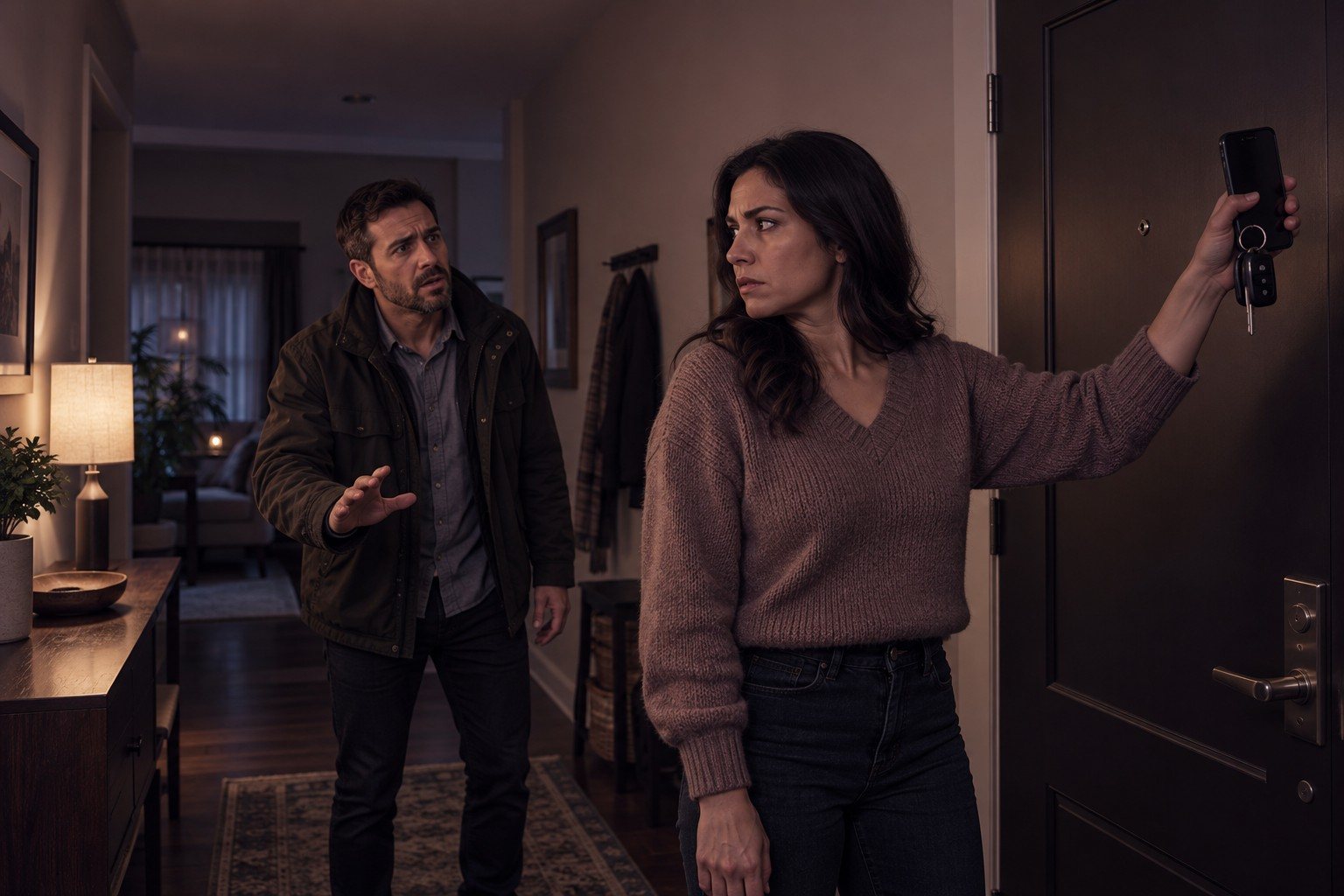
The self-petition is open to seven groups of people. Each is defined by who the abuser is to you and by timing. Read down until you find yourself, then open that page for the details. If none fits, the last section points to the other paths.

Spouses

The spouse of a U.S. citizen may self-petition as an immediate relative (INA 204(a)(1)(A)(iii); 8 U.S.C. 1154(a)(1)(A)(iii); 8 C.F.R. 204.2(c)). The spouse of a lawful permanent resident may self-petition in the F2A category (INA 204(a)(1)(B)(ii)). Pages: spouse of a U.S. citizen and spouse of a green card holder.
Under INA 204(a)(1)(A)(iii) and (B)(ii) and USCIS Policy Manual Vol. 3, Part D, ch. 2, a spouse shows:
- a qualifying marriage entered in good faith;
- battery or extreme cruelty by the spouse during the marriage, against you or your child;
- that you lived with the abuser during the marriage;
- good moral character; and
- eligibility for the immediate relative or F2A classification.
Why some lists show a sixth element
You may read elsewhere that a self-petitioner must prove extreme hardship. That was once the law. The Victims of Trafficking and Violence Protection Act of 2000 (Pub. L. 106-386, div. B, title V, sec. 1503) removed it from the statute. The regulation at 8 C.F.R. 204.2(c)(1)(i)(G) still prints the old text because it was never amended, and the statute and the USCIS Policy Manual, Vol. 3, Part D, control. Hardship is not part of the self-petition. It is part of VAWA cancellation of removal in immigration court, which is a different remedy.
When the marriage has ended or was never valid

- Former spouse. You may file within 2 years after the marriage ended, if there is a connection between the end of the marriage and the battery or extreme cruelty (INA 204(a)(1)(A)(iii)(II)(aa)(CC)(ccc); 204(a)(1)(B)(ii)(II)(aa)(CC)(bbb)). See the 2-year rule.
- The abuser died. The spouse of a U.S. citizen who died within the 2 years before filing may file (INA 204(a)(1)(A)(iii)(II)(aa)(CC)(aaa)).
- The abuser lost or gave up status. You may file if, within the 2 years before filing, a citizen abuser lost or renounced citizenship in a way related to an incident of domestic violence, or a permanent resident abuser lost that status due to one (INA 204(a)(1)(A)(iii)(II)(aa)(CC)(bbb); 204(a)(1)(B)(ii)(II)(aa)(CC)(aaa)). Both are on abuser died or lost status.
- Intended spouse. You believed in good faith that you married the abuser, and the marriage was not legitimate solely because the abuser was already married (INA 204(a)(1)(A)(iii)(II)(aa)(BB); INA 101(a)(50)). See intended spouse.
Children and parents

- Abused child. A child of a U.S. citizen or permanent resident parent who is unmarried and under 21 may self-petition (INA 204(a)(1)(A)(iv), (B)(iii); 8 C.F.R. 204.2(e)). A child who turns 21 may still file until age 25 if the abuse was at least one central reason for the delay (INA 204(a)(1)(D)(v)). See abused child.
- Abused parent. A parent abused by a U.S. citizen son or daughter who is at least 21 may self-petition (INA 204(a)(1)(A)(vii), added by VAWA 2005, Pub. L. 109-162). See abused parent.
- Children of a spouse. A spouse's children may be included on the petition, whether or not they were abused (8 C.F.R. 204.2(c)(4)). See children on your petition.
What does not decide your eligibility

- Your gender. The statute is gender neutral (INA 204(a)(1)). See men and VAWA and same-sex couples.
- Whether you were hit. Psychological abuse, and acts that are part of an overall pattern of violence, count (8 C.F.R. 204.2(c)(1)(vi)). The Ninth Circuit read extreme cruelty to reach non-physical, coercive control, judged across the whole relationship, in Hernandez v. Ashcroft, 345 F.3d 824 (9th Cir. 2003). See abuse without violence.
- How long you lived together. There is no minimum, as long as it was during the marriage (USCIS Policy Manual Vol. 3, Part D, ch. 2).
- A police report. USCIS must consider any credible evidence (INA 204(a)(1)(J)). See any credible evidence.
- The abuser's cooperation. None is needed, and the government may not make an adverse determination of admissibility or deportability using information furnished only by the abuser, unless you have a conviction listed in INA 237(a)(2) (8 U.S.C. 1367(a)(1)). USCIS does not apply that rule to the denial of an I-360 (PA-2025-34).
Two things do need care. First, where you file from: you may file from outside the United States only if the abuser is employed abroad by the U.S. government, is a member of the uniformed services, or abused you or your child here (INA 204(a)(1)(A)(v), (B)(iv)). Second, good moral character. An act or conviction connected to the abuse that is waivable for purposes of the petition does not bar a spouse or child (INA 204(a)(1)(C); INA 101(f)); the text does not name abused parents. If you were ever arrested or charged, including on the abuser's complaint, talk to your criminal lawyer before you write anything down, and read arrested or charged.
If none of this fits
If the abuser is not a citizen or green card holder, or you were never married, the U visa may be the path: domestic violence is a qualifying crime, the abuser need not be a citizen or permanent resident, and the parties need not be married (INA 101(a)(15)(U)(iii)). If you hold a two-year conditional green card through the abuser, the battered-spouse waiver of the joint I-751 filing is another route (INA 216(c)(4)(C)). Both are on other paths. If there is no abuse and your spouse is willing to file for you, the ordinary family petition is the usual route.
Read next: the self-petition, start to finish, battery or extreme cruelty, good-faith marriage, or the private screener.
Common questions
Does it matter whether the abuser was a citizen or a green card holder?
Yes, for the category. The spouse of a U.S. citizen petitions as an immediate relative under INA 204(a)(1)(A)(iii). The spouse of a lawful permanent resident petitions in the F2A preference category under INA 204(a)(1)(B)(ii), which means waiting for a current priority date in the Visa Bulletin before the green card step.
I still live with the abuser. Can I qualify?
Yes. The law asks that you lived with the abuser during the marriage; it does not ask you to move out, and there is no minimum period of shared residence (USCIS Policy Manual Vol. 3, Part D, ch. 2). Whether to stay or leave is a safety decision you make with an advocate, not a requirement of the petition.
The abuser never hit me. Can I still qualify?
Possibly. Battery or extreme cruelty includes psychological abuse and acts that are part of an overall pattern of violence (8 C.F.R. 204.2(c)(1)(vi)). The Ninth Circuit held in Hernandez v. Ashcroft, 345 F.3d 824 (9th Cir. 2003), that extreme cruelty reaches non-physical, coercive control, assessed in the context of the whole relationship.
What if the abuser is not a citizen or green card holder?
The self-petition requires an abuser who is a U.S. citizen or lawful permanent resident, with the exceptions for a recent death or loss of status. If that is not your situation, other paths may fit, including the U visa, where domestic violence is a qualifying crime and the parties need not be married (INA 101(a)(15)(U)(iii)).
The lawyers who will handle your case
One of them calls you back, privately, on your terms.



Talk to a lawyer privately. You decide how we reach you.
Tell us a safe number or email and a safe time, and whether we can leave a message. We never contact the person who hurt you, and we never call from a number or send anything that names this site. The first conversation is free and confidential, in English, Russian, Spanish or Uzbek, with a live interpreter for any other language.