
What a prima facie notice means for public benefits
A pending VAWA self-petition that sets out a prima facie case can make a self-petitioning spouse or child a "qualified alien" for certain federal public benefits under 8 U.S.C. 1641(c). It is not automatic. Three conditions apply, and the benefit agency decides one of them.
Current as of October 2026. We re-check this page every quarter and after any change in the law.
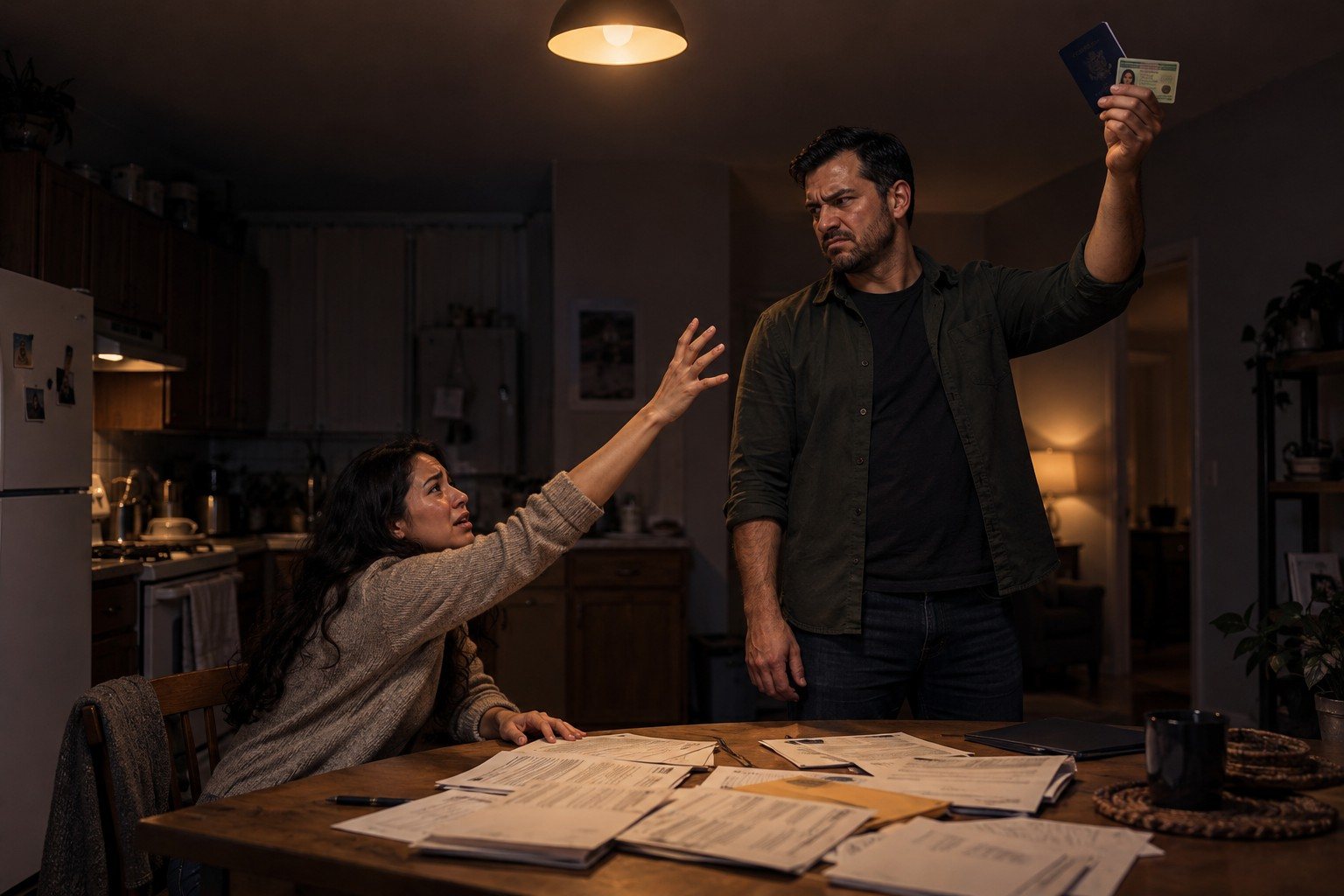
This post is dated October 26, 2026. It explains one document that confuses many people after they file: the Notice of Prima Facie Case. The sources are 8 U.S.C. 1641(c)(1) to (3), 8 C.F.R. 204.2(c)(6)(i) to (iii), and the USCIS Policy Manual at Volume 3, Part D, chapter 5(A).
What the notice is, and is not

After a VAWA self-petition is filed, USCIS may find that it sets out a prima facie case and issue a Notice of Prima Facie Case. That notice is not an approval. It is not a green card. It does not decide whether the abuse, the marriage or your good moral character will be found at the end. The petition is still decided later.
Its main effect is outside USCIS. It can be the paper a federal benefit agency looks for.
Who it can help

Under 8 U.S.C. 1641(c), a self-petitioning spouse or child whose petition is pending with a prima facie case, or is approved, can be a "qualified alien" for certain federal public benefits. Three conditions apply:
- The battery or extreme cruelty took place in the United States.
- The benefit agency finds a substantial connection between the abuse and the need for the benefit.
- The abuser no longer lives in the same household as you.
The second condition is decided by the benefit agency, not by USCIS. The third condition means a notice does not, by itself, open these benefits to a person still living with the abuser. That is not a reason to stay or to leave. It is one fact to weigh with an advocate when you make a safety plan.
Who it does not help
- Self-petitioning parents. The Policy Manual says self-petitioning parents are not qualified aliens under this provision (Volume 3, Part D, chapter 5(A)). The parent self-petition itself still exists, under INA 204(a)(1)(A)(vii). See abused parent.
- Petitions filed from abroad. USCIS does not issue the notice for petitions filed from outside the United States.
If you do not get a notice
Not receiving a Notice of Prima Facie Case does not mean the petition is weak or has been denied. The petition is decided on its own record, and USCIS must consider any credible evidence under INA 204(a)(1)(J). See after you file for what to keep track of while you wait.
What we do not publish
We do not publish the standard USCIS uses to decide whether a petition is prima facie, how long a notice stays valid, or which benefit programs follow from it. Those points are not yet on our verified ledger, and benefit programs differ by agency and by state. The benefit agency itself, or a benefits lawyer, can tell you what a particular program requires. We also do not publish processing times. See uscis.gov/processing-times.
The same status matters in immigration court
The "qualified alien" status in 8 U.S.C. 1641(c)(1)(B) also shows up in the VAWA motion to reopen. Under INA 240(c)(7)(C)(iv), filing that motion stays removal only for a qualified alien under 1641(c)(1)(B), and only if the motion establishes that status. See the VAWA motion to reopen.
A note on public charge
People worry that using benefits will hurt the green card later. VAWA self-petitioners are exempt from the public-charge ground of inadmissibility under INA 212(a)(4)(E)(i), and they need no affidavit of support (Form I-864). See public charge and VAWA.
Keep the notice safe

A Notice of Prima Facie Case names you and your case. Keep it, and any copies, where the abuser cannot find it. Our safe filing checklist has ideas. Federal officials may share information about your case with a benefit agency for 1641(c) purposes, one of the exceptions in 8 U.S.C. 1367(b); see confidentiality.
If you are in danger now, call 911. The National Domestic Violence Hotline is 1-800-799-7233, or text START to 88788. For the immigration side, call (718) 484-7510.
Read next: the prima facie determination, public benefits, or after you file.
Common questions
Is a prima facie notice an approval?
No. It is a notice that the pending petition sets out a prima facie case. Under 8 U.S.C. 1641(c) and 8 C.F.R. 204.2(c)(6), it can matter for certain federal benefits. The petition is still decided later.
I am an abused parent. Does the notice help me with benefits?
Under the Policy Manual, Volume 3, Part D, chapter 5(A), self-petitioning parents are not qualified aliens under this provision. The parent self-petition is still available under INA 204(a)(1)(A)(vii).
I filed from outside the United States. Will I get one?
No. USCIS does not issue a Notice of Prima Facie Case for petitions filed from abroad, under the Policy Manual, Volume 3, Part D, chapter 5(A).
The lawyers who will handle your case
One of them calls you back, privately, on your terms.



Talk to a lawyer privately. You decide how we reach you.
Tell us a safe number or email and a safe time, and whether we can leave a message. We never contact the person who hurt you, and we never call from a number or send anything that names this site. The first conversation is free and confidential, in English, Russian, Spanish or Uzbek, with a live interpreter for any other language.