
Waivers for VAWA self-petitioners
A problem in your history does not end a VAWA case. The statute gives self-petitioners exceptions and waivers that other applicants do not have, for unlawful presence, a prior removal, certain criminal grounds and fraud. Each one has its own conditions, and several ask you to show a connection to the abuse.
Current as of October 2026. We re-check this page every quarter and after any change in the law.
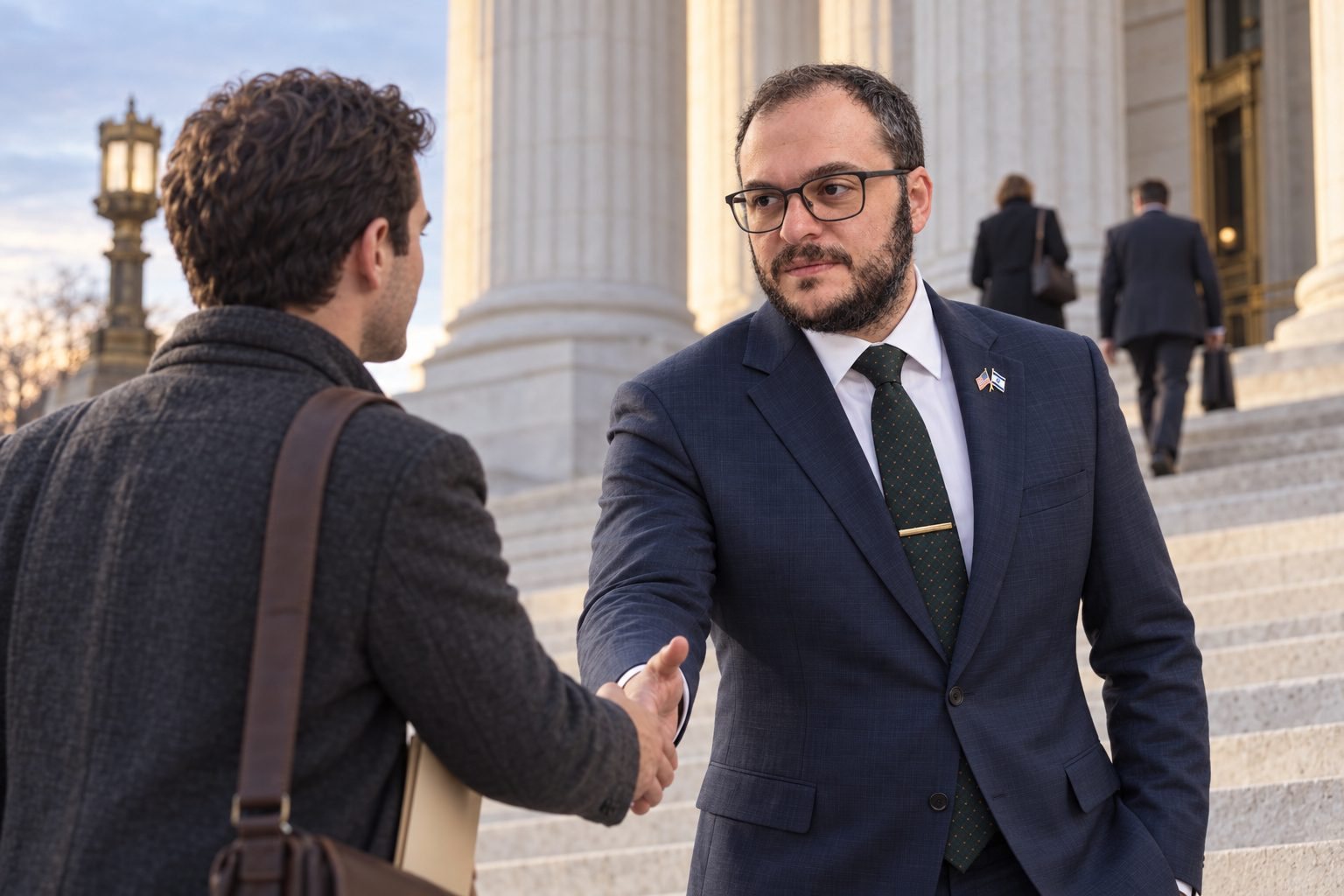
Abusers use a survivor's history as a weapon: the entry, the overstay, the old order, the arrest the abuser caused. Congress knew this, and wrote VAWA-specific exceptions and waivers into the grounds of inadmissibility. This page lists the ones in our verified ledger. It is part of the guide to your green card after VAWA.
The exceptions and waivers at a glance

| Problem in your history | What the law provides | Authority |
|---|---|---|
| Entry without inspection | Adjustment allowed once the VAWA petition is approved; the present-without-admission ground does not apply with a substantial connection to the abuse | INA 245(a); INA 212(a)(6)(A)(ii) |
| Unlawful presence, three- and ten-year bars | Exception for battered spouses and children, with a substantial connection between the abuse and the violation of the terms of a nonimmigrant visa | INA 212(a)(9)(B)(iii)(IV) |
| The permanent bar | Waiver for VAWA self-petitioners, with a connection to the abuse | INA 212(a)(9)(C)(iii) |
| Certain criminal grounds | Waiver for a VAWA self-petitioner of crimes involving moral turpitude, multiple convictions, prostitution and a single simple possession of 30 grams or less of marijuana; never for murder or torture | INA 212(h)(1)(C), (h)(2) |
| Fraud or misrepresentation | Fraud waiver; for a VAWA self-petitioner, extreme hardship to you or to your citizen, permanent resident or qualified-alien parent or child | INA 212(i)(1) |
| Fraud at admission, once here | Waiver of deportability for fraud at admission, available to VAWA self-petitioners | INA 237(a)(1)(H)(ii) |
| Public charge | Exempt; no Form I-864 | INA 212(a)(4)(E)(i), (C)(i) |
The conditions of the three main waivers are set out below, as of October 2026. Each still turns on your facts, and we apply them to your record at the consultation.
The connection to the abuse

Three of these rules ask for a link between the abuse and the problem: the entry rule in 212(a)(6)(A)(ii) asks for a substantial connection between the abuse and the unlawful entry; the unlawful-presence exception asks for a substantial connection between the abuse and the violation of the terms of a nonimmigrant visa; and the permanent-bar waiver asks for a connection to the abuse. The connection is shown with the same kind of evidence that supports the petition: your own declaration, and whatever else places the abuse and the immigration problem side by side in time. See VAWA and entry without inspection.
Criminal history
At the petition stage, good moral character is judged under INA 204(a)(1)(C) and INA 101(f). A self-petitioner is not barred by an act or conviction that is waivable for purposes of the petition and connected to the abuse. That exception covers spouses and children; its text does not name abused parents (see good moral character).
At the green card stage, INA 212(h)(1)(C) lets the government waive, for a person who "is a VAWA self-petitioner," the grounds for a crime involving moral turpitude (212(a)(2)(A)(i)(I)), multiple convictions (212(a)(2)(B)), prostitution (212(a)(2)(D)), immunity cases (212(a)(2)(E)), and a single offense of simple possession of 30 grams or less of marijuana (212(a)(2)(A)(i)(II)). Consent to reapply must also be granted in discretion (212(h)(2)). There is no waiver for murder or torture, or an attempt or conspiracy to commit them. For a person previously admitted as a permanent resident, an aggravated felony since admission, or less than 7 years of continuous lawful residence before proceedings began, bars the waiver. No court may review the decision (INA 212(h); 8 U.S.C. 1182(h)). Whether a particular offense can be waived depends on the record of conviction.
Arrests and charges come first
If you were arrested or charged, including on the abuser's complaint, talk to your criminal lawyer before you write anything down, and read arrested or charged. What a plea does to your status can be decided before the plea is entered.

Fraud and misrepresentation
Abusers sometimes control what a survivor says on forms, at the border or at an interview. Two waivers can help.
- INA 212(i), the inadmissibility waiver. For a VAWA self-petitioner, the standard is different from the ordinary one. The waiver requires that refusal would cause extreme hardship to you, or to your U.S. citizen, permanent resident or qualified-alien parent or child (INA 212(i)(1)). For ordinary applicants a child does not count; for a VAWA self-petitioner a child does. No court may review the decision (INA 212(i)(2)).
- INA 237(a)(1)(H), the deportability waiver. Once a person is here, deportability for fraud or misrepresentation at admission, willful or innocent, may be waived in discretion for a VAWA self-petitioner (237(a)(1)(H)(ii)). It also waives the inadmissibility grounds that resulted directly from the fraud. It is not available to a person described in 237(a)(4)(D).
Tell us exactly what was said, even if it is hard. A waiver is built on an honest account.
If you are in immigration court

The same history can come up as a charge of removability. In court, a separate waiver covers the domestic-violence deportability ground for a person who was battered or subjected to extreme cruelty and was not the primary perpetrator, if the judge also finds self-defense, a violation of a protection order meant to protect them, or a crime with no serious bodily injury connected to the abuse (INA 237(a)(7)). See the 237(a)(7) waiver and VAWA in immigration court.
Fees

As of October 2026, VAWA self-petitioners and their derivatives pay no government filing fee for the waiver forms I-212, I-601 and I-601A related to the benefit, or for the I-485, I-765, I-131, I-290B (in limited cases) and I-824 (8 C.F.R. 106.3(b)(6)). The USCIS filing fee page is the authority. Any government filing fee is separate from our legal fee.
Read next: entry without inspection, good moral character, arrested or charged, or your green card after VAWA.
Common questions
What is the difference between an exception and a waiver?
An exception means the ground does not apply to you if you meet its terms, such as the unlawful-presence exception in INA 212(a)(9)(B)(iii)(IV). A waiver means the ground applies, and you ask the government to forgive it, such as the waiver of the permanent bar in INA 212(a)(9)(C)(iii). A waiver has to be asked for, with evidence.
I have a conviction. Can VAWA still work for me?
Possibly. INA 212(h)(1)(C) gives a VAWA self-petitioner a waiver route for certain criminal grounds, and the self-petition's good moral character rule in INA 204(a)(1)(C) does not bar a self-petitioning spouse or child for an act or conviction that is waivable and connected to the abuse; the text does not name abused parents. Whether a particular offense can be waived depends on the record. Before anything is filed, talk to your criminal lawyer and let us read the record of conviction.
My abuser made me lie on an immigration form. Is that the end?
Not necessarily. INA 212(i) provides a fraud waiver for a VAWA self-petitioner, and INA 237(a)(1)(H) provides a waiver of fraud at admission for VAWA self-petitioners. For a VAWA self-petitioner, the 212(i) hardship can be to you yourself, or to your U.S. citizen, permanent resident or qualified-alien parent or child (INA 212(i)(1), as of October 2026). Whether either waiver fits depends on what was said, when and to whom. Tell us at the consultation; it is protected by attorney-client privilege.
Is there a fee for a waiver?
As of October 2026, VAWA self-petitioners pay no government filing fee for Forms I-212, I-601 and I-601A related to the benefit, under 8 C.F.R. 106.3(b)(6). The USCIS filing fee page on uscis.gov is the authority. Any government filing fee is separate from our legal fee.
The lawyers who will handle your case
One of them calls you back, privately, on your terms.
Talk to a lawyer privately. You decide how we reach you.
Tell us a safe number or email and a safe time, and whether we can leave a message. We never contact the person who hurt you, and we never call from a number or send anything that names this site. The first conversation is free and confidential, in English, Russian, Spanish or Uzbek, with a live interpreter for any other language.