
Case note: Hernandez v. Ashcroft
In Hernandez v. Ashcroft, decided October 7, 2003, the Ninth Circuit held that an abuser's behavior in the "contrite" phase of domestic violence can be extreme cruelty. It is a published decision, not our client, and it arose in an older form of VAWA relief in immigration court.
Current as of October 2026. We re-check this page every quarter and after any change in the law.
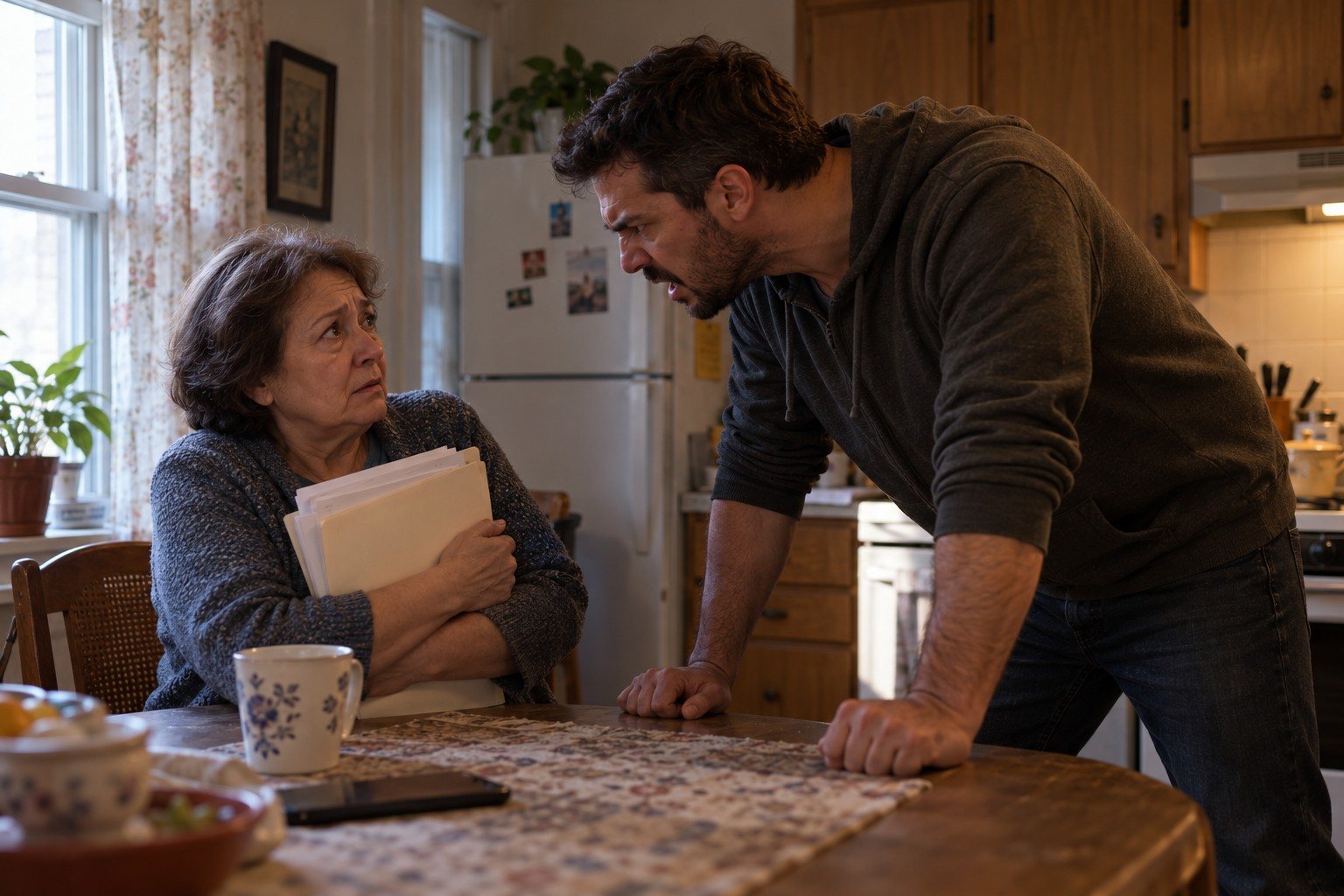
This post is dated October 26, 2026. It is a note on a published decision from October 7, 2003: Hernandez v. Ashcroft, 345 F.3d 824 (9th Cir. 2003), No. 02-70988. Not our client. Usher Law Group did not appear in the case. We summarize only what the opinion says, and you can read it in full on CourtListener. Its outcome does not predict yours.
What happened, as the opinion states it

Ms. Hernandez suffered life-threatening violence from her husband, a permanent resident of the United States, while they lived in Mexico. She fled to the United States. He found her, promised not to hurt her again, and begged her to return to Mexico with him. After she returned, the physical abuse began again. She escaped for good and applied for suspension of deportation under VAWA 1994.
The Board of Immigration Appeals denied relief. It found no battery or extreme cruelty in the United States, which the statute then required. The violence had happened in Mexico. What happened in the United States was the apologies and the persuasion.
What the court held

The Ninth Circuit disagreed with the Board. In its words: "We conclude that an abuser's behavior during the 'contrite' phase of domestic violence may, and in circumstances such as those present here does, constitute 'extreme cruelty.'"
The court explained why. Non-physical actions rise to the level of domestic violence when "tactics of control are intertwined with the threat of harm in order to maintain the perpetrator's dominance through fear."
Disposition: petition granted and remanded for further proceedings. A remand sends the case back to the agency. It is not a final grant of status, and we say so because it matters.
Why it still matters
The case arose under VAWA suspension of deportation, former INA 244(a)(3), not a self-petition. But the court applied the regulatory definition of battery or extreme cruelty at 8 C.F.R. 204.2(c)(1)(vi), which is the definition used for self-petitions today. That definition includes threatened acts, psychological abuse, and acts that may not initially appear violent but are part of an overall pattern of violence.
We cite Hernandez for one point: extreme cruelty reaches non-physical, coercive control, assessed in the context of the whole relationship.
What it does not say
- It does not say that every apology is abuse. The court looked at a specific pattern of violence followed by persuasion.
- It is a Ninth Circuit decision. How much weight it carries depends on the issue and on where your case is decided.
- The "in the United States" requirement it dealt with belonged to the older law. The self-petition today has its own rules on filing from abroad, under INA 204(a)(1)(A)(v) and (B)(iv).
Where the other published cases fit

Later courts have built on the same idea in VAWA cancellation cases. In Ruiz v. U.S. Attorney General, 73 F.4th 852 (11th Cir. 2023), not our client, the Eleventh Circuit held that extreme cruelty does not require proof of physical abuse, and that mental or emotional abuse is enough for that prong of INA 240A(b)(2). See real cases for that summary and the others.
What to take from it
If the abuse in your relationship came in cycles, with violence or threats followed by apologies, gifts and promises, write the whole cycle down in your declaration, not only the worst nights. USCIS must consider any credible evidence under INA 204(a)(1)(J). See writing your declaration.
We publish only real, published cases, from our ledger, each labeled "not our client." We do not publish stories about our own clients, and we never invent or combine stories. The other cases we cite are on real cases.
If you are in danger now, call 911. The National Domestic Violence Hotline is 1-800-799-7233, or text START to 88788. For a private consultation, call (718) 484-7510.
Read next: real cases, abuse without violence, or battery or extreme cruelty.
Common questions
Is Hernandez v. Ashcroft one of the firm's cases?
No. It is a published decision of the Ninth Circuit in which Usher Law Group did not appear. We summarize it from the opinion itself and link to it.
Does it apply to a self-petition at USCIS?
It arose under VAWA suspension of deportation, former INA 244(a)(3), not a self-petition. The court applied the regulatory definition at 8 C.F.R. 204.2(c)(1)(vi), the same definition used for self-petitions. How much weight it carries in your case depends on the issue and the circuit, which is a question for your lawyer.
The abuser apologizes every time. Can that be part of my case?
It can be part of the story you tell. Hernandez recognized that the contrite phase can be extreme cruelty. Whether it is in your case depends on the whole relationship, and the facts belong in your declaration.
The lawyers who will handle your case
One of them calls you back, privately, on your terms.



Talk to a lawyer privately. You decide how we reach you.
Tell us a safe number or email and a safe time, and whether we can leave a message. We never contact the person who hurt you, and we never call from a number or send anything that names this site. The first conversation is free and confidential, in English, Russian, Spanish or Uzbek, with a live interpreter for any other language.