
Checklist: evidence for a VAWA self-petition
A self-petition proves five things: a qualifying relationship, a marriage entered in good faith, that you lived with the abuser, the abuse, and good moral character. This list goes element by element, with what to use when the usual paper is out of reach. USCIS must consider any credible evidence, so a gap on this list is a problem to solve, not a dead end.
Current as of October 2026. We re-check this page every quarter and after any change in the law.
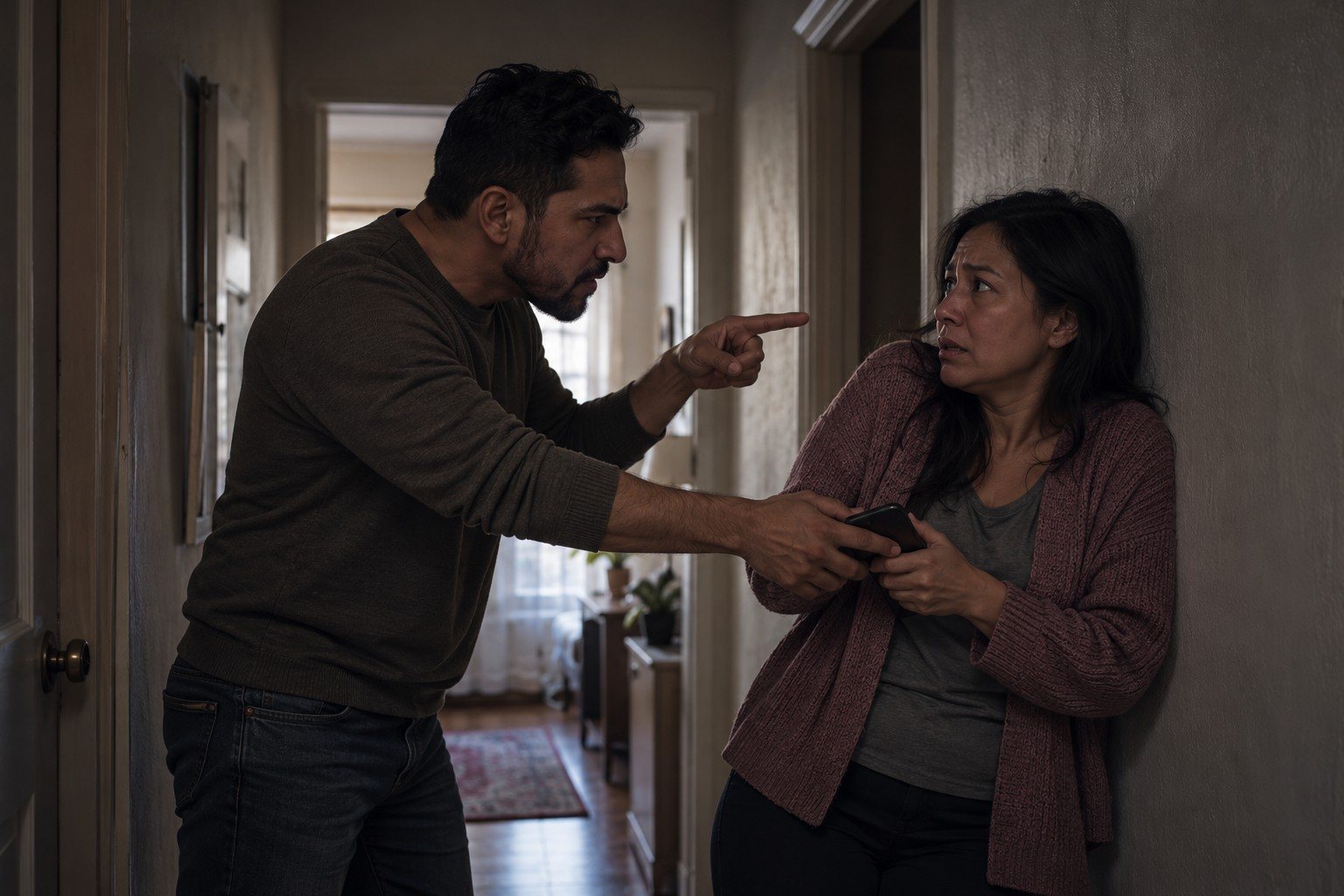

The elements for a spouse are in INA 204(a)(1)(A)(iii) and (B)(ii) and 8 C.F.R. 204.2(c)(1)(i): a qualifying marriage entered in good faith; battery or extreme cruelty by the spouse during the marriage, against you or your child; residence with the abuser during the marriage; good moral character; and eligibility for the immediate-relative or F2A classification. Children and parents have their own provisions; see abused child and abused parent. The whole petition is explained on the VAWA self-petition.
Each element is proved by a preponderance of the evidence, "more likely than not." A petition may not be denied for failing to submit a particular piece of evidence, but detailed, specific, corroborated evidence carries more weight (3 USCIS-PM D.2(A), D.5(B), as of October 2026). Every foreign-language document needs a full English translation, certified by the translator as complete and accurate, with the translator's certification of competence (8 C.F.R. 103.2(b)(3)).
Gather only what you can reach safely. Do not keep the pile at home. See the safe filing checklist.
1. Who you are, and who the abuser is

- Your identityPassport, birth certificate, any government ID.If the abuser holds them, see documents the abuser took. Copies and photos help.
- The abuser's citizenship or permanent residenceCitizen: a U.S. birth certificate, unexpired U.S. passport, naturalization or citizenship certificate, or Consular Report of Birth Abroad (FS-240). Permanent resident: a copy of the green card or other DHS proof (3 USCIS-PM D.2(B)(1)).Give identifying details (name, date and place of birth, country of birth, Social Security number) and USCIS searches its records. The burden stays on you, so add what you know: an earlier petition they filed for you, an A-number.
- The relationshipMarriage certificate; for a child, your birth certificate; for a parent, your son's or daughter's birth certificate.A new certified copy from the office that recorded it.
- Prior marriages endedDivorce decrees or death certificates for any earlier marriage of either of you, issued by a civil authority. A decree still in a waiting or revocable period is not final (3 USCIS-PM D.2(B)(2)).Tell us the country and year; we work out where records are kept. An intended spouse proves only their own prior marriages ended.
2. A marriage entered in good faith

- Your life togetherJoint lease or deed, joint bank, utility or credit accounts, insurance beneficiary designations, tax returns (3 USCIS-PM D.2(C)).Photos over time, messages, travel records, cards and letters; the courtship and ceremony in your declaration.
- Children togetherBirth certificates listing both parents.School or medical records listing both of you.
- People who knew you as a coupleSigned letters from friends, relatives, clergy, neighbors.Your own account of how you met, why you married, and how you lived.
See good faith marriage.
3. You lived with the abuser

You must have lived with the abuser during the marriage (INA 204(a)(1)(A)(iii)(II)(dd), (B)(ii)(II)(dd)). There is no minimum period. If you are in the United States when you file, a home you shared abroad can count; a visit while living elsewhere does not (USCIS Policy Manual Vol. 3, Part D, ch. 2). USCIS rewrote its VAWA policy on December 22, 2025 (PA-2025-33), requiring residence during the relationship and primary evidence of a good-faith marriage where available, for pending and new filings.
- A shared addressLease, deed or mortgage; insurance, bank or tax records with a common address; children's birth certificates; school or medical records (3 USCIS-PM D.2(F)).Detailed affidavits from friends, family, a landlord or neighbor; photos at home.
4. Battery or extreme cruelty
The definition in 8 C.F.R. 204.2(c)(1)(vi) covers acts and threatened acts of violence, psychological and sexual abuse, and acts that are part of an overall pattern of violence. See battery or extreme cruelty.
- Your declarationYour own detailed account. In many cases it is the center of the record.Every case has one. See the declaration checklist.
- Records, if they existPolice reports and court records, protective orders, medical and school records, records of seeking shelter or services, and photos with who took them, when and where (3 USCIS-PM D.2(E)(2)).Not required. Many survivors never called anyone. See protective orders.
- People who saw it, or saw its effectsLetters from friends, relatives, coworkers, clergy.People you told afterward, even much later.
- ProfessionalsLetters from a counselor, therapist, advocate, doctor or social worker. A psychological evaluation carries weight only if a qualified professional who treated or thoroughly evaluated you prepared it with established tools, with their CV or certification attached (3 USCIS-PM D.2(E)(2)).You can start seeing a counselor now; a letter can describe what they observe.
- MessagesTexts, emails, voicemails, social media.Your description of what was said, if the messages are gone or unsafe to keep.
5. Good moral character
- Your affidavitA detailed signed statement about your character, under 8 C.F.R. 204.2(c)(2)(v).Your lawyer drafts it with you.
- Police clearancesA local police clearance or state background check for each place, in or outside the United States, where you lived six months or more in the three years before filing. Name checks must cover every name you have used, including a maiden name (8 C.F.R. 204.2(c)(2)(v); 3 USCIS-PM D.2(G)(3)).If a clearance cannot be obtained, explain why; we work out what to offer instead under the any credible evidence rule.
- Any arrest or chargeArrest reports, certified dispositions, and the statute's maximum penalty.Talk to your criminal lawyer before you write anything down. Read arrested or charged.
- A child under 14Presumed to have good moral character; no evidence needed unless USCIS asks (3 USCIS-PM D.2(G)(2)).Nothing to gather.
For spouses and children, an act or conviction that is waivable for purposes of the petition and connected to the abuse does not bar good moral character, under INA 204(a)(1)(C). That exception does not name abused parents. See good moral character.
Before you file

- The filing address and current edition of Form I-360 are on the USCIS Form I-360 page. USCIS changed the VAWA filing location on October 7, 2026, with a grace period for packages postmarked on or before November 9, 2026; see the VAWA, T and U filing locations page. We do not copy the address here, because it changes.
- An I-360 is properly filed only on the current edition, at the correct location, with a valid signature; otherwise it is rejected and returned (3 USCIS-PM D.4(A)).
- There is no government filing fee for a VAWA Form I-360, under 8 C.F.R. 106.2(a)(17)(ii).
- Children you want on the petition: their birth certificates. See children on your petition.
- Processing times are posted by USCIS at uscis.gov/processing-times.
Read next: evidence, and what makes it good, the declaration checklist, evidence without documents, any credible evidence, or after you file.
Common questions
Is there a list of required documents for VAWA?
No single document is required. Under INA 204(a)(1)(J) and 8 C.F.R. 204.2(c)(2)(i), USCIS must consider any credible evidence, and the weight it gives each item is in its sole discretion. The checklist on this page is the usual starting point, with substitutes for each item.
Is there a government filing fee for the VAWA I-360?
No. There is no government filing fee for a VAWA Form I-360, under 8 C.F.R. 106.2(a)(17)(ii) and the form instructions. Check the current instructions on the USCIS Form I-360 page before you file.
How long does USCIS take to decide?
We do not publish processing times. They change, and USCIS posts its own at uscis.gov/processing-times. If an I-360 has stalled well past the posted time, read the page on an I-360 taking too long.
Do I have to prove the marriage was happy?
No. You have to show you entered the marriage in good faith, meaning you meant it when you married. A marriage that later became abusive can still be a good faith marriage. The evidence is about why you married and how you lived, not whether it worked.
The lawyers who will handle your case
One of them calls you back, privately, on your terms.


Talk to a lawyer privately. You decide how we reach you.
Tell us a safe number or email and a safe time, and whether we can leave a message. We never contact the person who hurt you, and we never call from a number or send anything that names this site. The first conversation is free and confidential, in English, Russian, Spanish or Uzbek, with a live interpreter for any other language.