
The complete 2026 guide to the VAWA self-petition
If a U.S. citizen or green card holder spouse, parent, or adult son or daughter abused you, you can file your own petition on Form I-360 without them. This guide walks through the whole case as the law stands in October 2026, from the first question to the green card and beyond.
Current as of October 2026. We re-check this page every quarter and after any change in the law.
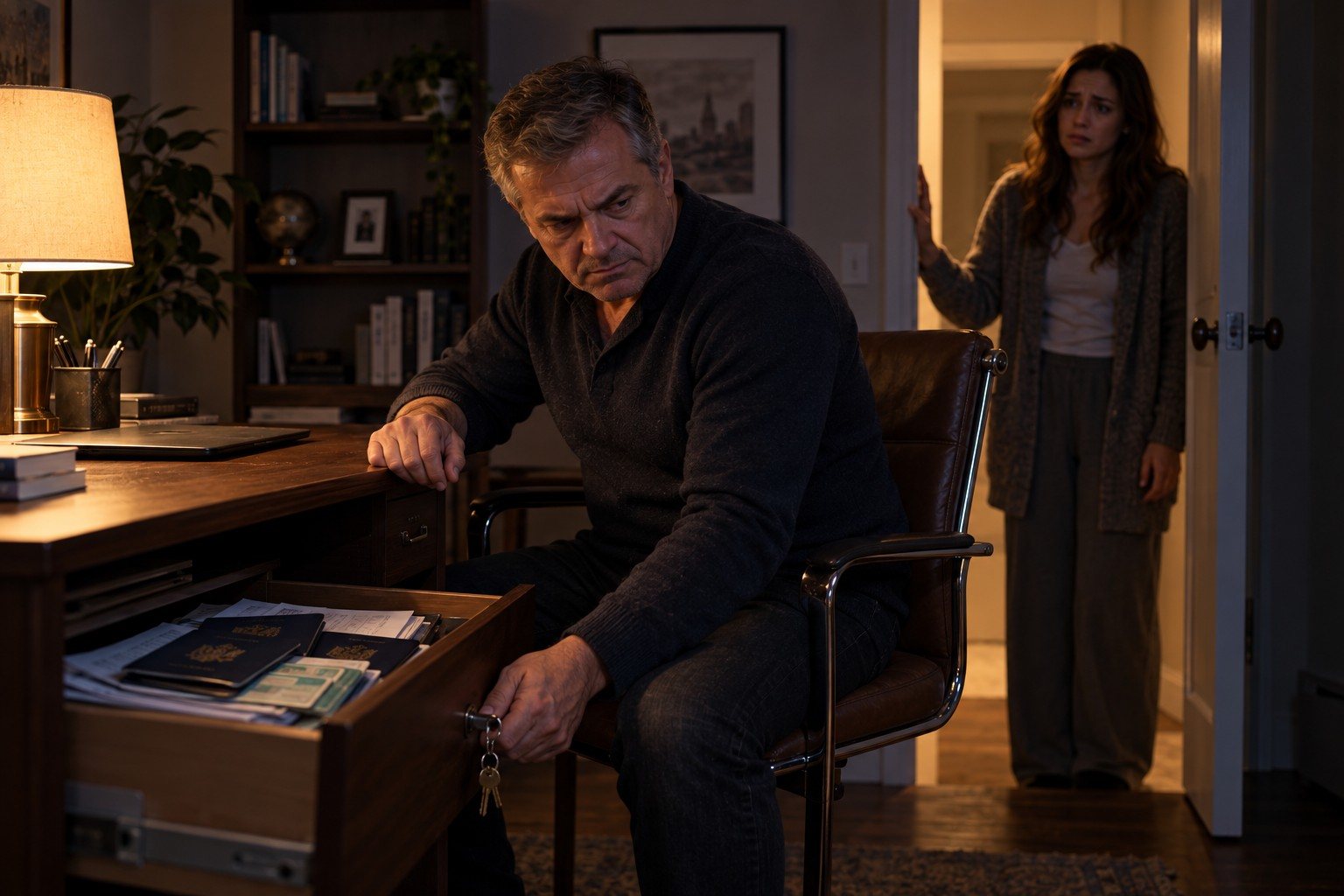
For years the abuser may have told you that your immigration future runs through them. For a spouse, child or parent of a U.S. citizen or green card holder, the law says otherwise. The Violence Against Women Act lets you petition for yourself. This article puts the whole case in one place, in the order it happens. Each section links to the page that goes deeper.
Every legal statement below carries its citation in the same sentence. You will not find processing times or approval rates here, because we do not publish them.
Step 1: Find your door

The self-petition is not one rule. It is a set of doors, and who the abuser is to you decides which one you use.
| You are | The rule | Authority |
|---|---|---|
| Spouse of a U.S. citizen | Petition as an immediate relative | INA 204(a)(1)(A)(iii) |
| Spouse of a green card holder | Petition in the second preference (F2A) category | INA 204(a)(1)(B)(ii) |
| Former spouse | File within 2 years after the marriage ended, if the end of the marriage is connected to the abuse | INA 204(a)(1)(A)(iii)(II)(aa)(CC)(ccc); 204(a)(1)(B)(ii)(II)(aa)(CC)(bbb) |
| Spouse of a citizen who died | File within 2 years after the death | INA 204(a)(1)(A)(iii)(II)(aa)(CC)(aaa) |
| Spouse of an abuser who lost or renounced status | File within 2 years, if a citizen's loss is related to, or a green card holder's loss is due to, an incident of domestic violence | INA 204(a)(1)(A)(iii)(II)(aa)(CC)(bbb); 204(a)(1)(B)(ii)(II)(aa)(CC)(aaa) |
| Intended spouse | You married in good faith, and the marriage was invalid only because of the abuser's bigamy | INA 204(a)(1)(A)(iii)(II)(aa)(BB); INA 101(a)(50) |
| Child | Unmarried and under 21, or until 25 if the abuse was at least one central reason for the delay | INA 204(a)(1)(A)(iv), (B)(iii); 204(a)(1)(D)(v) |
| Parent | Abused by a U.S. citizen son or daughter who is at least 21 | INA 204(a)(1)(A)(vii) |
If none of these fit, the self-petition may not be your case. The abuser may not be a citizen or green card holder, or you may never have married. Other paths exist, and our comparison of them is in VAWA, the U visa, or the I-751 waiver. If you are not sure which row is yours, start at who is abusing you or try the private screener, which stores nothing.
VAWA covers survivors of any gender (INA 204(a)(1)). Husbands, wives, same-sex spouses, children and parents use the same doors. See men and VAWA and same-sex couples.
Step 2: Know what you have to prove

For a spouse, the statute sets out the elements in INA 204(a)(1)(A)(iii) for a citizen's spouse and INA 204(a)(1)(B)(ii) for a green card holder's spouse. As the USCIS Policy Manual, Vol. 3, Part D, ch. 2, reads them after Policy Alert PA-2025-33, you show:
- A qualifying marriage, or intended marriage, entered in good faith.
- That you, or your child, were battered or subjected to extreme cruelty by your spouse during the marriage.
- That you lived with the abuser during the marriage. There is no minimum period. If you are in the United States when you file, the shared home can have been abroad (INA 204(a)(1)(A)(iii)(II)(dd); 3 USCIS-PM D.2(F)).
- Good moral character.
- That you are eligible for the immediate-relative or F2A classification.
The element that is no longer the law
The regulation at 8 C.F.R. 204.2(c)(1)(i)(G) still lists extreme hardship as an element, and older guides repeat it. Congress removed it from the statute in the Victims of Trafficking and Violence Protection Act of 2000 (Pub. L. 106-386, div. B, title V, sec. 1503(b)(1)(A)). The USCIS Policy Manual, Vol. 3, Part D, says VAWA 2000 supersedes that part of the regulation. You do not prove hardship to file a self-petition.
Two other parts of the old regulation were also overtaken in 2000: the requirement to live in the United States and the requirement to be married at filing. The statute now limits only who may file from abroad. You can file from outside the country if the abuser is employed abroad by the U.S. government, is a member of the uniformed services, or abused you or your child in the United States (INA 204(a)(1)(A)(v), (B)(iv)). See survivors abroad.
Children and parents prove a parallel set of facts about their own relationship. Read abused child and abused parent.
Step 3: Understand what counts as abuse

Many people who qualify do not think of what happened as abuse, because no one went to the hospital. The regulation is broader than that. Battery or extreme cruelty includes any act or threatened act of violence, including forceful detention, that results or threatens to result in physical or mental injury; psychological or sexual abuse or exploitation; and acts that may not look violent on their own but are part of an overall pattern of violence (8 C.F.R. 204.2(c)(1)(vi)).
The Ninth Circuit read extreme cruelty to reach non-physical, coercive control, judged across the whole relationship, in Hernandez v. Ashcroft, 345 F.3d 824 (9th Cir. 2003), a published decision (not our client). That case arose in an older form of VAWA relief in court, but it applied the same regulation.
Control through immigration papers is common enough that we wrote a separate article on it: how abusers use immigration status as control. For the general picture, see abuse without violence.
Step 4: Build the evidence

USCIS must consider any credible evidence you submit, and decides how much weight each item gets (INA 204(a)(1)(J); 8 C.F.R. 204.2(c)(2)(i)). No police report, protective order or medical record is required. You prove each element by a preponderance of the evidence, meaning more likely than not (3 USCIS-PM D.2(A), D.5(B)).
A typical record is organized around the elements:
- Your declarationYour account, in order, in your own words, covering each element.There is no substitute. See how to prepare a VAWA declaration.
- The marriage and the relationshipSince PA-2025-33 (Dec. 22, 2025), primary evidence of the marriage, such as the certificate and proof that all prior marriages ended, plus evidence that the relationship was real.If the abuser kept the papers, see documents the abuser took.
- Shared residenceRecords that show you lived together during the marriage.Statements from people who visited you at home can help.
- The abuseStatements from people who saw it or its effects, counseling or medical records, messages, any police or court records.Your declaration can describe what you cannot safely retrieve.
- Good moral characterYour affidavit plus police clearances for each place you lived six months or more in the three years before filing (8 C.F.R. 204.2(c)(2)(v)).Talk to us before filing if a clearance cannot be obtained.
The Policy Manual no longer says USCIS will not deny a petition solely for missing good moral character evidence (PA-2025-33). Treat the clearances as part of the core file, not an afterthought. Our evidence checklist puts all of this on one page.
If you were arrested or charged
An act or conviction connected to the abuse does not bar good moral character if it is waivable for purposes of the petition (INA 204(a)(1)(C); INA 101(f)). The text names spouse and child petitions, not abused parents. Every arrest still needs a close read. Talk to your criminal lawyer before you write anything down about it, and see arrested or charged.
Step 5: File safely

As of October 2026 there is no government filing fee for a VAWA Form I-360 (8 C.F.R. 106.2(a)(17)(ii); Form I-360 instructions). Any legal fee is separate.
USCIS changed where VAWA petitions go on October 7, 2026, with a grace period for packages postmarked on or before November 9, 2026. A VAWA I-360 is now mailed to a USCIS lockbox marked "Attn: 1367," chosen by the state where you live: New York, New Jersey and Pennsylvania go to Chicago, and Florida goes to Phoenix (uscis.gov, Certain VAWA, T and U filing locations). Check the I-360 page on the day you mail. We do not reprint the address.
If the abuser is a U.S. citizen, the green card application can be filed with the I-360 or at any later point (3 USCIS-PM D.4(A)). If the abuser is a green card holder, that waits until a visa number is available (uscis.gov, I-360 page).
If the abuser ever filed an I-130 for you, its priority date can carry over to the self-petition (8 C.F.R. 204.2(h)(2)). Bring whatever you know about that old filing.
A safe address and a safe phone
USCIS mail goes where you tell it to. Choose an address and a phone the abuser cannot reach before you file. Our safe filing checklist covers where to keep copies. A safety plan is made with a domestic violence advocate. If you are in danger now, call 911.
Step 6: While the petition is pending
Two things can happen before a decision.
Prima facie determination. A pending petition that sets out a prima facie case can make a self-petitioning spouse or child a "qualified alien" for certain federal public benefits. The abuse must have happened in the United States, the benefits agency must find a substantial connection between the abuse and the need for benefits, and the abuser must no longer live in the same household (8 U.S.C. 1641(c); 8 C.F.R. 204.2(c)(6)(i)). USCIS does not issue the notice for petitions filed from abroad, and self-petitioning parents are not "qualified aliens." See prima facie determination.
Requests for evidence. USCIS may ask for more. Answer on time and in full. See RFEs and notices of intent to deny.
Life does not pause. A divorce after you file does not affect the petition (INA 204(a)(1)(A)(vi), (B)(v)(I)). Remarrying before approval is a basis for denial (8 C.F.R. 204.2(c)(1)(ii); INA 204(h)). If a green card holder abuser naturalizes after you file, the petition converts to the immediate-relative category; if they lose status after you file, the petition is not affected (INA 204(a)(1)(B)(v)). For more, read VAWA after divorce or death.
For timing, we link rather than quote: uscis.gov/processing-times. If the case has stalled, see I-360 taking too long.
Step 7: Approval, work and protection
An approved self-petitioner, and any derivative children, can get a work permit. A principal can ask for the first one on the I-360 itself; renewals, replacements and children use Form I-765 in category (c)(31) (INA 204(a)(1)(K); Form I-765 instructions). There is no government fee for that I-765 (8 C.F.R. 106.3(b)(6)). Approved self-petitioners and derivatives may also be considered for deferred action on a case-by-case basis (3 USCIS-PM D.5; INA 204(a)(1)(D)(i)(II), (IV)). See work permit and deferred action.
A child listed on your petition who turns 21 before approval is treated as a self-petitioner with your priority date, as long as the child stays unmarried (INA 204(a)(1)(D)(i)(III), (D)(ii)). See children on your petition.
Step 8: The green card

Approval is the base for adjustment of status. Several rules that block other applicants do not block a VAWA self-petitioner:
- You may adjust even if you were not inspected and admitted or paroled (INA 245(a)). The entry-without-inspection ground does not apply if you show a substantial connection between the abuse and the unlawful entry (INA 212(a)(6)(A)(ii)).
- None of the INA 245(c) bars applies to a person with an approved VAWA self-petition (INA 245(c)).
- You are exempt from the public-charge ground and need no Form I-864 affidavit of support (INA 212(a)(4)(C)(i), (E)(i)).
- There is no government fee for the I-485 for a VAWA self-petitioner as of October 2026 (8 C.F.R. 106.3(b)(6)).
A citizen's spouse is an immediate relative with no Visa Bulletin wait (INA 201(b)(2)(A)(i)). A green card holder's spouse adjusts only when the priority date is current in the Visa Bulletin (INA 203(a)(2)(A); INA 245(a)(3)). The full sequence is in the VAWA green card, step by step.
Step 9: Citizenship
A person who became a permanent resident as the battered spouse or child of a U.S. citizen may apply to naturalize after 3 years, without the usual requirement to be living in marital union with the citizen (INA 319(a)). See citizenship after VAWA. Under PA-2025-34 (Dec. 22, 2025), USCIS treats 8 U.S.C. 1367 confidentiality as ending at naturalization.
Your file is protected, within limits
The government may not disclose information about a VAWA applicant to anyone, with limited exceptions, and may not make an adverse admissibility or deportability determination using information furnished only by the abuser or the abuser's family, unless you have been convicted of a crime listed in INA 237(a)(2) (8 U.S.C. 1367(a)(1), (a)(2)). USCIS reads the second rule narrowly: it does not apply to the denial of an I-360, I-751 or I-765V (PA-2025-34). The law does not stop anyone from calling immigration authorities, and it does not bind a state family or criminal court; that is our reading of its scope. The details are in VAWA confidentiality under 8 U.S.C. 1367.
If you are already in immigration court

A self-petition can still be filed, and the court has its own VAWA tools: VAWA cancellation and the VAWA motion to reopen. Read VAWA in deportation proceedings before you do anything else, and if you are detained see detained survivor.
How we help

You choose how we contact you; see a private consultation.
Read next: the self-petition overview, who qualifies, any credible evidence, or the green card after VAWA.
Common questions
Does the abuser have to sign anything?
No. The self-petition is filed by you alone on Form I-360 under INA 204(a)(1). The abuser does not sign it, sponsor it, or agree to it. Federal law, 8 U.S.C. 1367(a)(2), also limits what the government may disclose about your case.
Do I need a police report or a protective order?
No single document is required. USCIS must consider any credible evidence, and the weight it gives each item is in its discretion (INA 204(a)(1)(J); 8 C.F.R. 204.2(c)(2)(i)). Many petitions rest on a detailed declaration supported by whatever records and statements exist.
Is there a government filing fee?
As of October 2026 there is no government filing fee for a VAWA Form I-360 (8 C.F.R. 106.2(a)(17)(ii)). The I-485, I-765 and I-131 that follow also carry no government fee for a VAWA self-petitioner (8 C.F.R. 106.3(b)(6)). Legal fees are separate.
How long does the case take?
We do not publish processing times, because they change and we cannot vouch for a figure. USCIS posts its own at uscis.gov/processing-times. If your case has stalled well past the posted time, read our page on an I-360 that is taking too long.
Can I include my children?
Yes. A spouse who self-petitions may include their children as derivatives, whether or not the children were abused (INA 204(a)(1)(A)(iii), (B)(ii); 8 C.F.R. 204.2(c)(4)).
The lawyers who will handle your case
One of them calls you back, privately, on your terms.



Talk to a lawyer privately. You decide how we reach you.
Tell us a safe number or email and a safe time, and whether we can leave a message. We never contact the person who hurt you, and we never call from a number or send anything that names this site. The first conversation is free and confidential, in English, Russian, Spanish or Uzbek, with a live interpreter for any other language.